
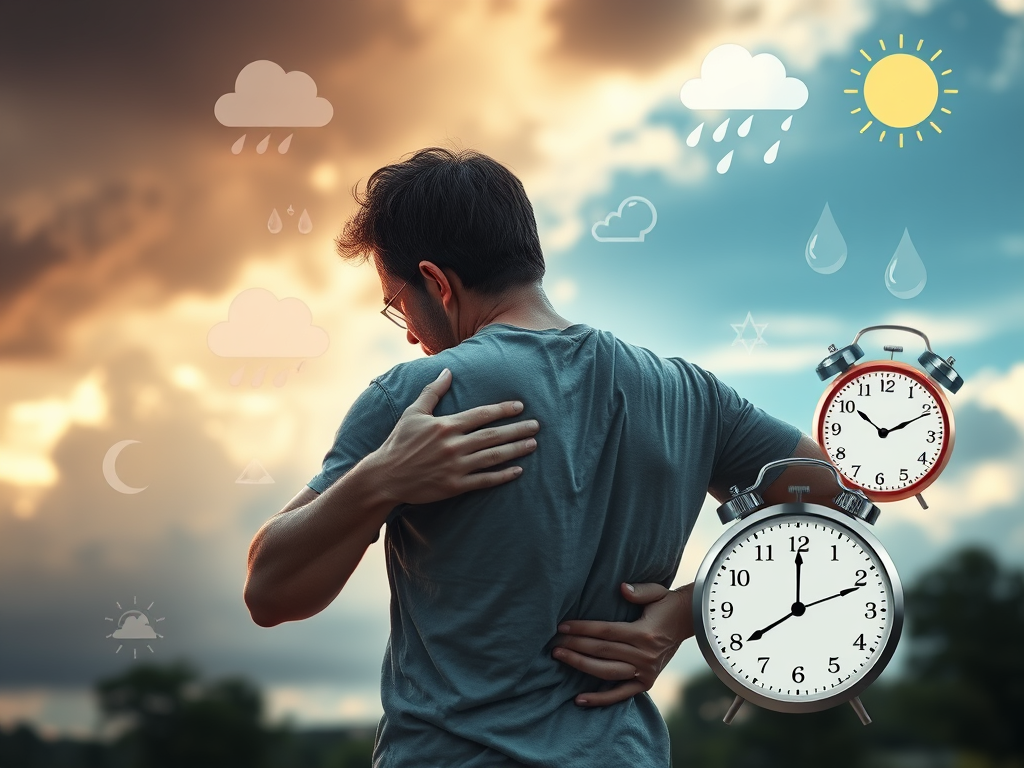
Do You Feel More Pain When the Weather Changes? You’re Not Alone.
Ever feel like a human barometer, predicting storms with your joints? Or maybe your chronic pain spikes out of nowhere, only to realize later that the temperature just dropped 20 degrees?
If you live with chronic pain, you know that weather changes and even the dreaded Daylight Savings Time (DST) shift can turn manageable pain into an unbearable flare-up.
You’re not imagining it. Science backs up what chronic pain sufferers have known for years: sudden weather shifts and disruptions to your internal clock can increase inflammation, fatigue, and pain sensitivity. And with DST throwing off our sleep cycles twice a year, it’s no wonder that millions of us struggle with increased pain every spring and fall.
So, what exactly is happening in our bodies—and what can we do about it?
🌦️ How Weather Conditions Affect Chronic Pain
1. Barometric Pressure: The Silent Trigger
When air pressure drops (especially before storms or season changes), tissues inside our bodies expand slightly, putting extra pressure on nerves and joints. This can lead to:
✔ Increased stiffness and joint pain (especially in arthritis and fibromyalgia).
✔ More migraines and headaches due to pressure shifts.
✔ Increased nerve pain in conditions like neuropathy and CRPS.
2. Cold Weather: A Pain Amplifier
Colder temperatures can make chronic pain worse by:
✔ Tightening muscles and joints, leading to stiffness.
✔ Constricting blood vessels, reducing circulation to painful areas.
✔ Heightening nerve sensitivity, especially in fibromyalgia and Raynaud’s syndrome.
3. Hot Weather: Inflammation and Fatigue
While warmth can help some people, excessive heat and humidity can worsen pain by:
✔ Causing joint swelling and inflammation.
✔ Triggering dehydration, leading to muscle cramps and headaches.
✔ Increasing fatigue, which lowers pain tolerance.
4. Humidity Swings: A Hidden Pain Culprit
✔ High humidity traps heat in the body, increasing inflammation.
✔ Low humidity can dry out tissues, leading to sinus pain and stiffness.
5. Wind and Storms: More Than Just a Bad Hair Day
✔ Changing atmospheric conditions can trigger nerve sensitivity, increase muscle stiffness, and worsen migraines.
✔ Many chronic pain sufferers report feeling storm-related pain hours before the weather changes.
⏰ How Daylight Savings Time (DST) Makes Chronic Pain Worse
Twice a year, we lose or gain an hour—and for many, that’s enough to throw the body into chaos.
People with chronic pain are especially vulnerable to sleep disruptions, fatigue, and increased pain sensitivity due to DST shifts. Here’s why:
1. Circadian Rhythm Disruption = More Pain
Your body’s internal clock controls pain perception and inflammation. Even a one-hour shift can:
✔ Increase inflammatory markers, making pain worse.
✔ Trigger fatigue, which lowers your body’s ability to cope with pain.
✔ Worsen muscle stiffness by disrupting deep sleep cycles.
2. Sleep Loss Increases Pain Sensitivity
Studies show that even mild sleep deprivation makes pain feel more intense. DST-related sleep disruptions can:
✔ Lower pain tolerance.
✔ Increase joint stiffness and muscle tension.
✔ Worsen fatigue-related pain (common in fibromyalgia and arthritis).
3. Mood Swings and Anxiety Worsen Flares
✔ DST shifts can trigger Seasonal Affective Disorder (SAD), increasing depression and pain.
✔ Anxiety about poor sleep or pain flares can create a vicious cycle.
4. Medication Schedules Get Thrown Off
✔ Many pain medications work best on a strict schedule.
✔ Even a small shift in timing can lead to breakthrough pain, especially for arthritis, migraines, and nerve pain.
🔹 What Can You Do? Managing Weather & DST-Related Pain
For Weather-Related Pain
✅ Track Weather Patterns & Pain Flares
- Keep a pain journal to identify personal triggers.
- Use weather apps that track barometric pressure changes (e.g., AccuWeather).
✅ Stay Warm (or Cool) as Needed
- In cold weather: Layer up, use heating pads, and keep moving.
- In hot weather: Stay hydrated and avoid excessive sun exposure.
✅ Gentle Exercise & Hydration
- Hydration reduces muscle cramps and headaches.
- Gentle movement (walking, stretching) prevents stiffness.
For DST-Related Pain
✅ Adjust Sleep Gradually
- Shift bedtime 15-30 minutes earlier or later in the days leading up to DST.
- Stick to a consistent wake-up time, even on weekends.
- Get morning sunlight to help reset your internal clock.
✅ Limit Caffeine & Screens at Night
- Blue light from screens suppresses melatonin, making it harder to adjust.
- Avoid caffeine 4-6 hours before bedtime to prevent sleep disturbances.
✅ Adjust Medications Gradually
- Shift medication times by 15 minutes per day leading up to the time change.
- Consult your doctor if pain flares worsen or if you experience breakthrough pain.
Final Thoughts: You’re Not Alone in This Battle
Living with chronic pain is already tough, but weather changes and time shifts can make it feel like an uphill battle. The good news? Small adjustments to your routine, tracking your personal pain triggers, and staying proactive can make a big difference.
💬 Now, I want to hear from you!
- Do you feel more pain when the weather changes or during Daylight Savings Time?
- What strategies have helped you manage these challenges?
👇 Share your experiences in the comments! Let’s help each other navigate chronic pain—one season at a time.
🔗 Want more tips on managing chronic pain?
Subscribe to my Substack for practical advice, support, and the latest research on living well with chronic pain.
(Researched and drafted with assistance from ChatGPT)