
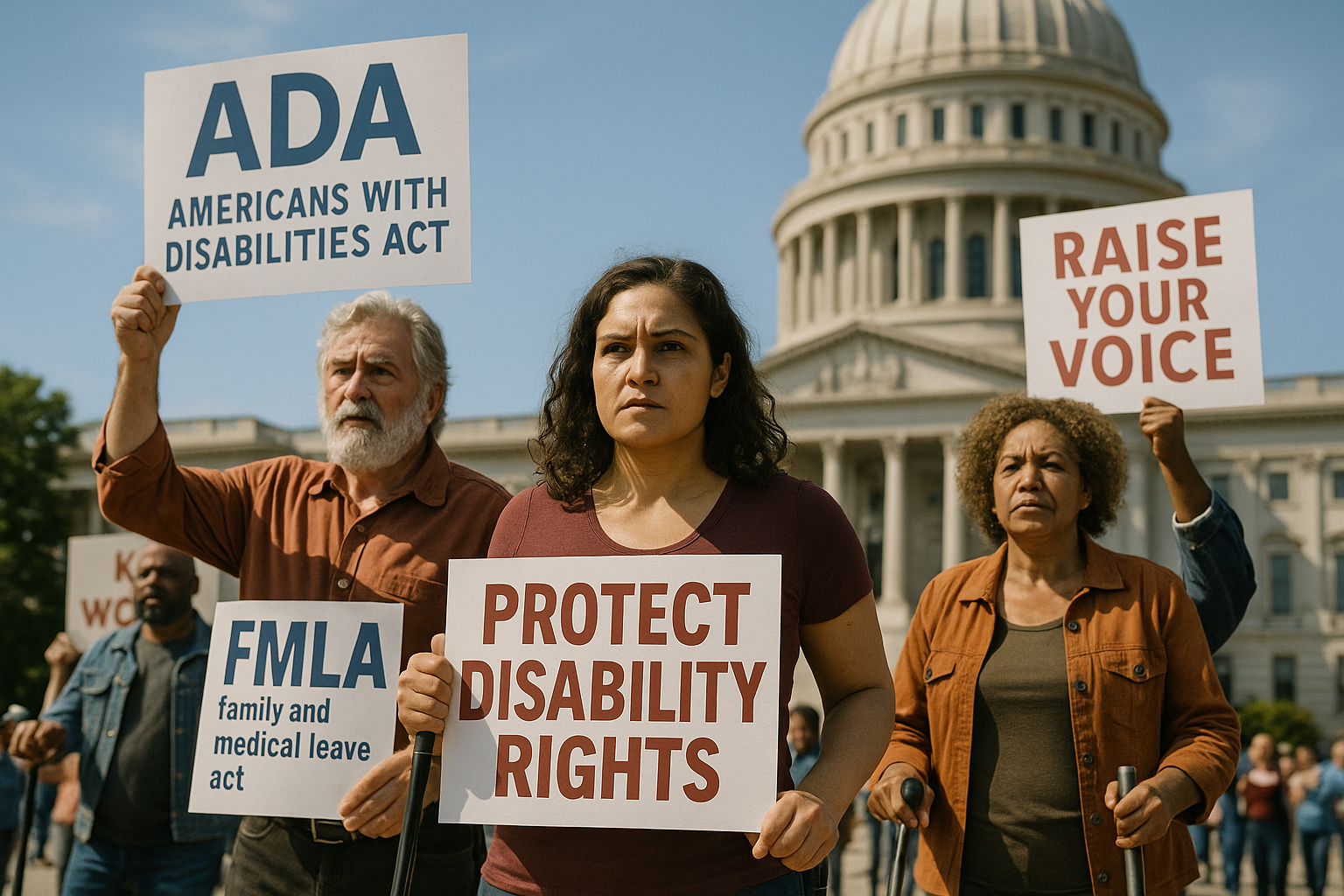
How people living with chronic pain can safeguard their protections, share their stories, and influence state and national policy.
Living with chronic pain is more than just managing symptoms. It is also about protecting our rights and making sure policymakers hear our voices. The truth is, decisions that affect our care, our access to treatments, and even our daily quality of life are made in statehouses and in Washington, D.C. If we do not speak up, others will speak for us—and their priorities may not reflect our needs.
This post is about what each of us can do to both protect our rights and to raise our voices in state and national politics.
Protecting Your Rights
The first step is knowing what protections already exist:
- Americans with Disabilities Act (ADA): Prevents discrimination in employment, public accommodations, and government services.
- More information:
- ADA.gov official site – https://www.ada.gov/
- Introduction to the ADA – https://www.ada.gov/topics/intro-to-ada/
- USA.gov Disability Rights – https://www.usa.gov/disability-rights
- More information:
- Family and Medical Leave Act (FMLA): Offers job-protected leave for medical or family health reasons.
- More information:
- U.S. Department of Labor – https://www.dol.gov/agencies/whd/fmla
- General FMLA overview – https://www.dol.gov/general/topic/benefits-leave/fmla
- USA.gov Family Leave Act page – https://www.usa.gov/family-leave-act
- More information:
- Affordable Care Act (ACA): Bans denial of insurance coverage for pre-existing conditions.
- More information:
- Healthcare.gov pre-existing conditions page – https://www.healthcare.gov/coverage/pre-existing-conditions/
- HHS overview on pre-existing conditions – https://www.hhs.gov/healthcare/about-the-aca/pre-existing-conditions/index.html
- USA.gov Health Insurance Marketplace – https://www.usa.gov/health-insurance-marketplace
- More information:
- State-specific disability rights laws: Many states expand upon federal protections.
- More information:
- Bloomberg Law overview of state disability discrimination laws – https://pro.bloomberglaw.com/insights/labor-employment/state-disability-discrimination-laws/
- California state & federal disability rights law PDF – https://www.dgs.ca.gov/-/media/Divisions/CCDA/Tabs/Business-Connect/Introduction-to-State-and-Federal-Disability-Rights-Laws.pdf
- California Civil Rights Department overview – https://en.wikipedia.org/wiki/California_Civil_Rights_Department
- More information:
Practical steps you can take:
- Keep thorough medical documentation (diagnoses, treatment records, doctor’s letters).
- Appeal insurance denials; persistence works.
- File ADA complaints with the Department of Justice or your state’s disability rights office.
- For Medicare/Medicaid issues, use the appeals process through the Centers for Medicare & Medicaid Services.
Raising Your Voice in Politics
Protecting your rights is essential, but it is not enough. Chronic pain needs a louder, stronger voice in politics. Here’s how you can raise yours:
- Engage with legislators: Share your story with local, state, and federal representatives. Request meetings with staff, and follow-up.
- Join advocacy groups: Organizations like the U.S. Pain Foundation, American Chronic Pain Association, and World Patients Alliance offer training, campaigns, and platforms to be heard.
- Track legislation: Use Congress.gov (https://www.congress.gov/) for federal bills, and your state legislature’s website for local bills. GovTrack (https://www.govtrack.us/) makes monitoring easier.
- Testify and comment: Submit comments on proposed regulations at Regulations.gov (https://www.regulations.gov/). Testify at state capitol hearings when bills affecting chronic pain are discussed.
- Build coalitions: Team up with patient advocates, disability rights groups, and caregivers. Our voices are stronger together.
Personal Actions That Strengthen Advocacy
Sometimes the smallest personal steps make the most significant political impact:
- Tell your story: Have both a short “elevator pitch” and a longer written version of your chronic pain journey. Stories move people more than statistics.
- Stay visible: Write op-eds, letters to the editor, or post on social media tagging legislators.
- Vote and mobilize: Register to vote, and remind others in the pain community that policy decisions depend on who shows up at the ballot box.
Resources to Get Started
- U.S. Pain Foundation Advocacy – https://uspainfoundation.org/advocacy/
- American Chronic Pain Association – https://www.acpanow.com/
- World Patients Alliance – https://www.worldpatientsalliance.org/
- Disability Rights Education & Defense Fund – https://dredf.org/
- Congress.gov – https://www.congress.gov/
- Regulations.gov – https://www.regulations.gov/
Closing
We live in a system where policy decisions have real consequences for our care, our independence, and our dignity. Protecting our rights means knowing the law and using it. Raising our voices means making sure lawmakers hear from us directly—not just from lobbyists, insurers, or pharmaceutical companies.
Each voice matters. Each story matters. And together, our collective voices can change how chronic pain is understood, treated, and respected.
Call to Action
This week, take one step. Choose one action, whether that’s looking up your state’s disability protections, sending an email to your representative, joining an advocacy group, or simply sharing your story with a friend. Advocacy does not have to be overwhelming. It starts with a single action, and each action strengthens our collective voice.
Disclaimer: The views, positions, and recommendations expressed in this article are based on my personal experiences and independent research. They are solely my own and do not necessarily reflect the views, policies, or positions of the American Chronic Pain Association (ACPA).
This article was drafted with the assistance of ChatGPT.